


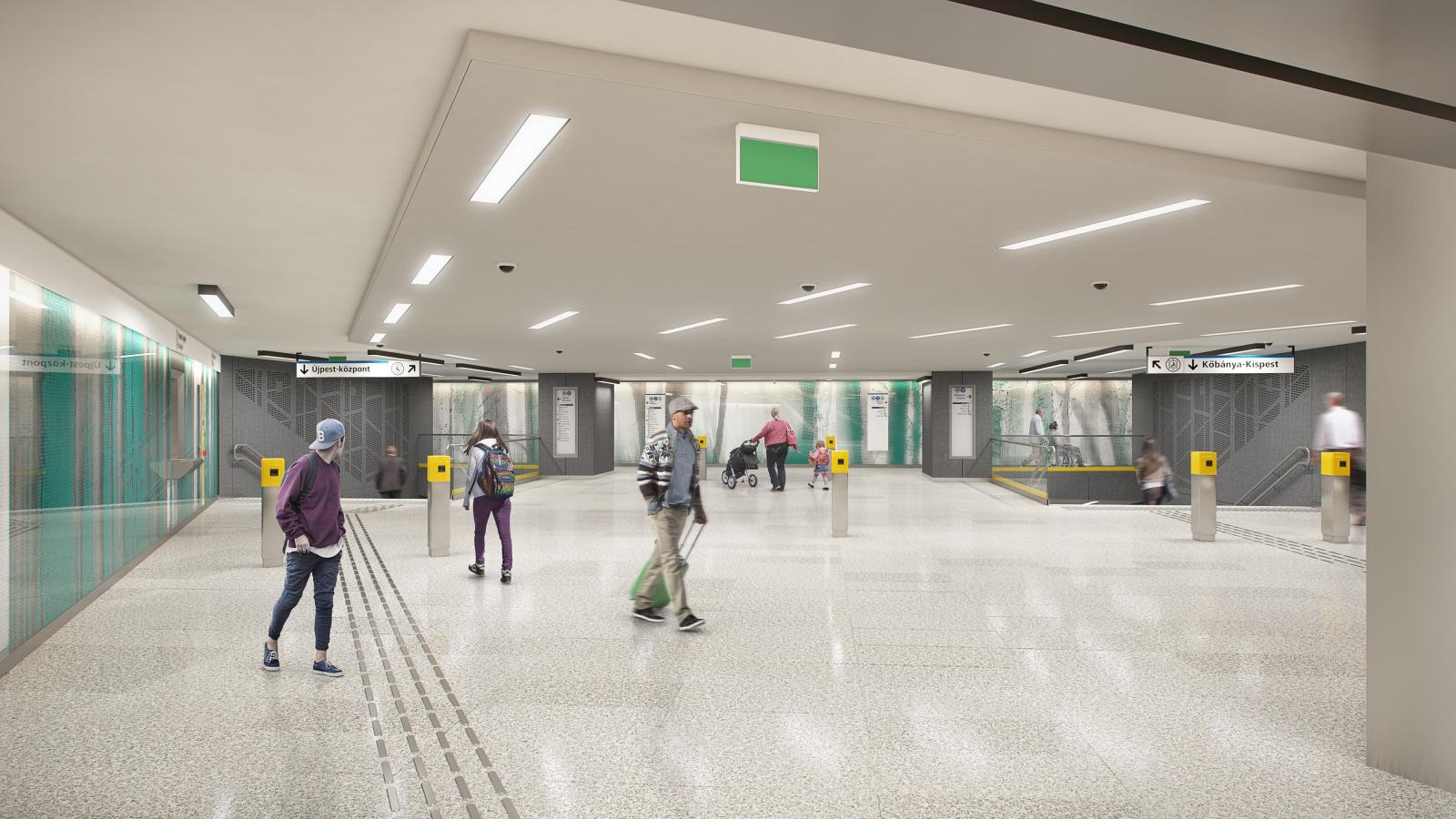
The stations of the southern section of metro line M3 will reopen soon and after a year and a half, a renewed environment, modern materials, shapes and colors await the traveling public. The interior architectural plans are made by Paragram Stúdió Kft. as the general designer, and separate architectural offices worked at each station. Although 75 percent of the reconstruction takes place behind the scenes, the assessment of the subway renovation still depends on the 25 percent visible to the public. Based on the visual designs, we can already get acquainted with the future image of the stations, however, in order to understand the message of the spaces, we call on the inspiration of the designers.
Architectural concept of the southern section
The main motif of the special architectural language of the line between Népliget and Kőbánya-Kispest, made between 1975 and 1980, is the large, single-colored surfaces, in which the seating furniture is included as beautiful, colorful inserts, and the gray suspended ceiling, which unites the long platforms. The original concept was rethought and hidden in a modern robe along the aforementioned gestures, leaving large contiguous surfaces and formula-like treated space shaping. The iconic plastic seats are reborn in a family of uniquely designed fine concrete furniture. The design of the characteristic, variable elements is adapted to the spaces of the stations - of course, in addition to the design, ergonomics was also emphasized.
Népliget
From the beginning, the starting point of the planning was the formulation of the Ferencvárosi Torna Club (FTC) stadium and the eagle statue. For the marked green surfaces of the underpass, on the pavements of the platform, the color and form of both the stadium and the statue have been transformed into an interior design element. The metallic-looking structure was followed, as the FTC sports field is also dominated by shades of gray, and the geometric design of the wall covering patternes the structure of the eagle’s wings. The interior design of the station aims to reflect the appearance of FTC with symbols.

Ecseri út
Perhaps all the changes will be most spectacular at this station. Basically, the original passenger area also stuck out of line like a cuckoo’s egg. The designers did not respond to the challenges of the “new age” with colors or surfaces, but left with great formal gestures - the effect prepared by the original designers. There is no underpass here, the entrance opens to the middle of the platform, we emerge into the underground space from the tranquil light of the surface. The drama of the awakening experience was articulated architecturally by the designers. The dark gates turn into elongated benches where we can relax, and the light walls, floors and ceilings are tamed into a clean, pleasant space.


Pöttyös utca
Admiration for the past. The modernization is almost of a reconstruction nature. The characteristic yellow color worked so well in the passenger areas that it was saved into the future, as a new element, small-tone mosaics in filtered tones appear at the entrances, framing the solid-colored surface. Of course, new furniture, clean surfaces reflects XXI. century-like appearance to the station. The most striking change is that the surface building is being transformed, but the end result here is most similar to the initial state.


Határ út
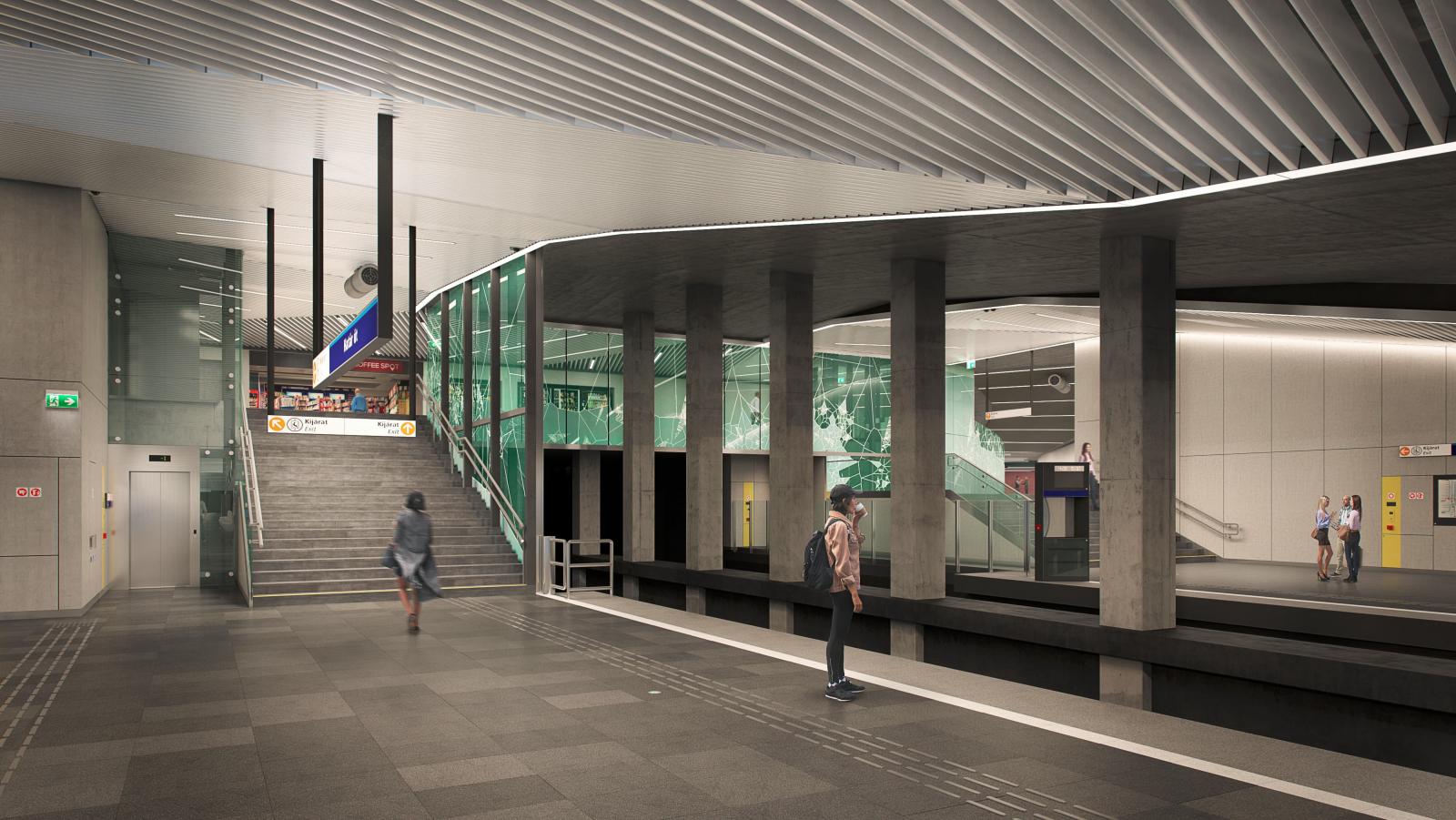
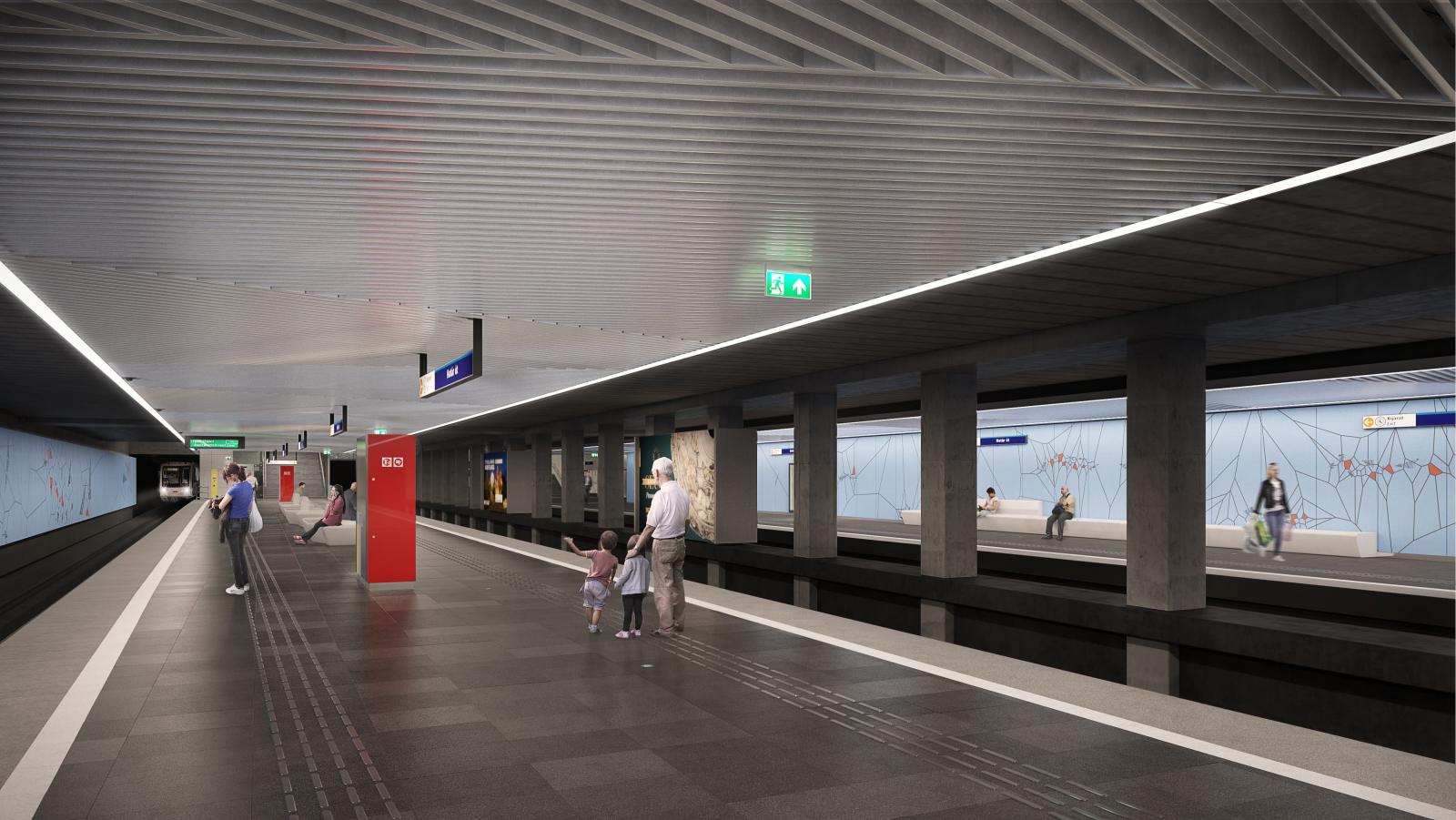
The spatial structure of the metro station differs from the other three passenger areas, as we arrive to a gallery from the underpass, which is an important element of the spatial shape above the middle tracks. The previously open part is given a glass surface, which not only serves as a decoration, but also has a fire protection function. The blue color of the platform returns, albeit in a different shade, but in harmony with the already familiar black floor and the rewritten, trapezoidal shaped suspended ceiling. The unity of the blue side wall and the glass wall is made exciting by a special design developed by graphic artists. The pattern, reminiscent of a spider’s web, is broken by vivid patterns evocative of the reddish hue of the poppy field. In what association do these playful motives evoke in someone? It turns out over time. The real solution lies in a mathematical formula.
Written by: Júlia Vincze